Why Jewelry Design, Materials, and Branding Influence Retail Prices
Jewelry pieces that look similar can have very different retail prices. Gemstone quality, metal composition, craftsmanship, production volume, and brand positioning all affect the final price. Two bracelets may share the same design, yet their manufacturing costs and market value can differ significantly.
A moissanite Cuban link bracelet illustrates how these factors work together. Its price can depend on the size and quality of the stones, the metal used for the links, the complexity of the setting, and the finishing process. Understanding these differences helps retailers establish prices and gives consumers a clearer picture of what they are paying for.
How Gemstone Selection Affects Jewelry Costs
Gemstones contribute to jewelry pricing through their quality, availability, cutting requirements, and market demand. The Gemological Institute of America (GIA) explains that diamond quality is evaluated using four characteristics: carat weight, color, clarity, and cut.
A diamond’s price can change considerably as these characteristics vary. Larger stones with desirable quality grades generally command higher prices, although market conditions and individual characteristics also affect their value.
Moissanite offers a different cost structure. Originally discovered in nature, it is now produced commercially as a laboratory-created gemstone. The GIA identifies moissanite as a distinct mineral with optical properties that differ from those of diamond.
For manufacturers, gemstone selection affects material expenses and the precision needed during cutting and setting. Retailers must also consider how customers perceive different stones and whether they are willing to pay more for particular characteristics.
Why Metal Composition Changes the Price
A bracelet’s metal content can account for a substantial portion of its production cost. Gold, silver, platinum, and base metal alloys have different raw material prices, physical properties, and manufacturing requirements.
The World Gold Council explains that gold jewelry is commonly made with alloys rather than pure gold. Alloying changes the metal’s hardness, color, and suitability for everyday wear.
For example, 18-karat gold contains 75% gold, while 14-karat gold contains approximately 58.3%. Two otherwise similar bracelets can therefore have different material costs because of their gold content and total weight.
Gold-plated jewelry has a different construction. A thin layer of gold covers another metal, reducing the amount of precious metal required. However, plating thickness, underlying materials, and production quality still influence manufacturing expenses.
What Makes Craftsmanship and Design Complexity Expensive?
Jewelry manufacturing involves more than assembling stones and metal. Designers and production teams must consider measurements, structural strength, stone placement, surface finishing, and wearer comfort.
The GIA highlights the importance of jewelry design and manufacturing knowledge in creating pieces that function as intended. Design choices can affect production methods, material use, and assembly requirements.
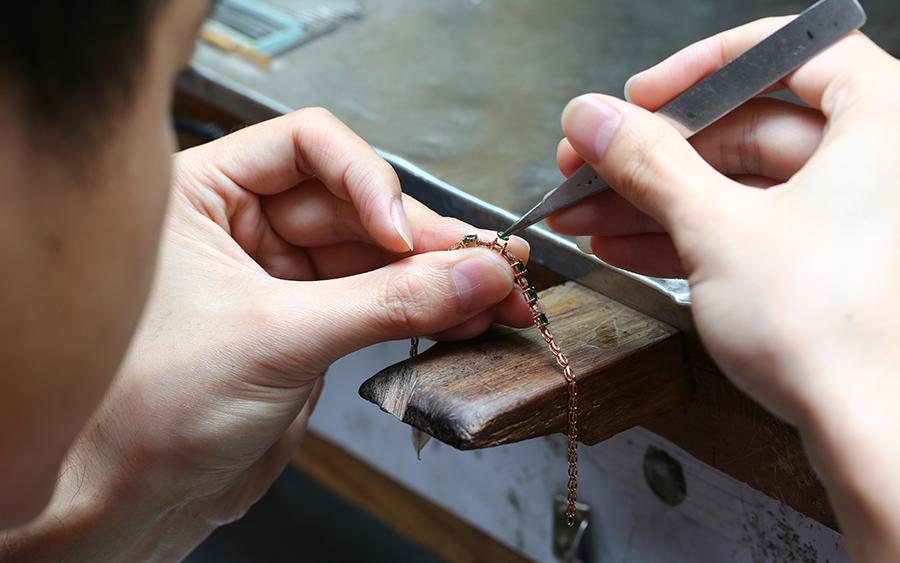
Complex link patterns require careful attention to movement and alignment. Adding multiple gemstones increases the number of settings that workers or automated equipment must prepare and inspect.
Hand finishing can introduce additional labor costs. Polishing individual components, correcting imperfections, and checking stone security take time.
These expenses become especially relevant when comparing intricate statement pieces with simpler designs. A heavier or more detailed bracelet may require additional materials, specialized equipment, or longer production time.
Mass Production Versus Handcrafted Jewelry
Mass production allows manufacturers to spread certain expenses across larger quantities. Equipment, tooling, and design development costs can be distributed among many finished pieces.
The U.S. Small Business Administration (SBA) identifies fixed and variable costs as important considerations when calculating business expenses and pricing products.
For jewelry manufacturers, fixed costs may include equipment and workshop expenses. Variable costs can include gemstones, metal, packaging, and labor associated with each item.
Handcrafted jewelry often follows a different model. Individual production, custom adjustments, and detailed finishing can increase the labor required per piece.
However, handmade production does not automatically mean superior quality. Similarly, mass-produced jewelry can achieve consistent specifications through standardized manufacturing and quality-control processes.
Retail prices should reflect measurable differences in materials, construction, labor, and the intended customer market rather than production labels alone.
How Does Brand Positioning Influence Retail Prices?
Brand positioning adds another dimension to jewelry pricing. Established labels may invest heavily in advertising, store design, packaging, customer service, and product development.
Research published by the Harvard Business Review explains that brand equity can influence consumer preferences and willingness to pay. Customers may associate familiar brands with consistent quality, distinctive design, or a particular shopping experience.
Premium-branded jewelry can therefore carry higher prices than visually similar unbranded pieces. However, a higher price does not necessarily indicate better materials or construction.
Retailers must distinguish between the physical cost of a product and the additional value customers associate with its brand.
Balancing Production Costs and Consumer Demand
Jewelry pricing requires businesses to consider manufacturing expenses, operating costs, competition, and customer expectations.
The SBA recommends evaluating costs and market conditions when developing a pricing strategy. These considerations also apply to other retail industries, where retail business pricing strategies must account for inventory expenses, operating costs, and customer demand. Setting prices too low can reduce profitability, while prices above customer expectations may limit demand.
For jewelry retailers, the challenge is balancing these factors without losing sight of product quality. Material specifications and manufacturing methods provide a foundation for pricing, while design and branding influence perceived value.
As consumer preferences evolve, businesses may adjust their product ranges, materials, and pricing strategies. Clear product information can help customers compare alternatives and make purchasing decisions based on their budgets and expectations.


















 Boston Consulting Group estimates that the market for tokenized illiquid assets could reach trillions of dollars over the next decade if adoption continues across financial markets. That projection reflects growing interest from banks, asset managers, and corporations that see blockchain technology as a practical tool for improving the way assets are issued, managed, and transferred. As regulatory frameworks become clearer in several regions, more businesses are evaluating whether tokenization can support their long-term financial strategies.



 Instagram has over 2 billion active users, making it a goldmine for businesses aiming to grow. With its visual appeal and engaged audience, the platform offers unique opportunities to connect with customers and drive revenue. Brands that master Instagram’s tools like paid ads, influencer partnerships, and smart content can turn likes into sales. Let’s explore how to leverage these strategies to scale your business.
 Major U.S. banks are exploring cryptocurrency ventures, signaling a shift in traditional finance. From pilot programs to stablecoin projects, these institutions are cautiously embracing digital assets. This trend is reshaping the business of banking.
 Entrepreneurs are the backbone of innovation, often requiring financial tools to realize their visions. In Lubbock, Herring Bank has emerged as a trusted partner for business owners, providing tailored mortgage solutions that fuel growth and innovation.
 AI Transforming Financial Decision-Making
 Fintech’s Role in Global Business Expansion